

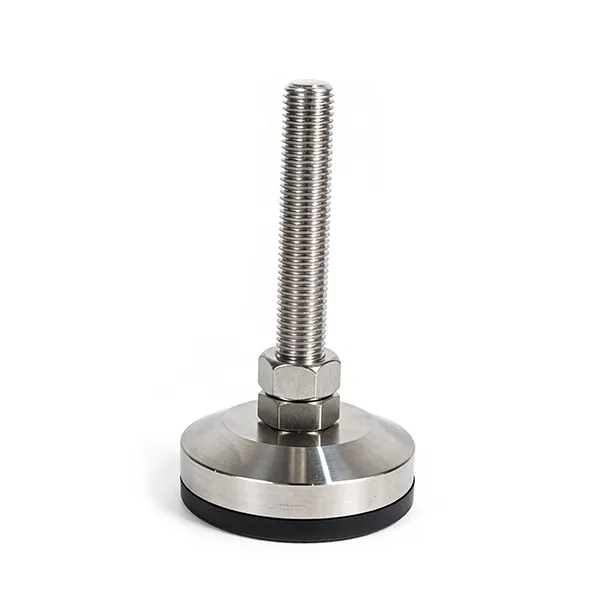
When it comes to leveling equipment, there are various types available in the market. As a supplier of stainless steel levelers, I've had the opportunity to work with different kinds of leveling solutions and understand their unique features. In this blog, I'll be talking about the differences between stainless steel levelers and other types of levelers.
Material and Durability
One of the most significant differences between stainless steel levelers and other types lies in the material. Stainless steel is known for its excellent corrosion resistance. It can withstand harsh environments, including exposure to moisture, chemicals, and extreme temperatures. This makes stainless steel levelers ideal for industries such as food processing, pharmaceuticals, and marine applications, where hygiene and durability are crucial.
On the other hand, other types of levelers might be made from materials like carbon steel or plastic. Carbon steel levelers are strong and can handle heavy loads, but they are prone to rust if not properly coated or maintained. Plastic levelers, while lightweight and cost - effective, may not be as durable as stainless steel, especially in high - stress or abrasive environments.
For example, in a food processing plant, where the equipment is frequently washed down with water and cleaning agents, stainless steel levelers will not corrode, ensuring long - term stability and safety. In contrast, carbon steel levelers could develop rust over time, which might contaminate the food products.
Load - Bearing Capacity
Stainless steel levelers are designed to handle a wide range of loads. They are often used in heavy - duty applications where stability is of utmost importance. The high strength - to - weight ratio of stainless steel allows these levelers to support large and heavy machinery without deforming.
Other types of levelers may have limitations in terms of load - bearing capacity. Plastic levelers, for instance, are better suited for light - duty applications such as small furniture or electronic equipment. They may not be able to handle the weight of industrial machinery. Carbon steel levelers can handle heavier loads, but their performance may be affected by corrosion, which can weaken the material over time.
If you're looking for a leveler to support a large industrial machine, stainless steel levelers are a great choice. They can provide the stability and strength needed to keep the machine in place, even under continuous operation.
Precision and Adjustability
Stainless steel levelers are often engineered to provide high precision in leveling. They can be adjusted to very fine tolerances, ensuring that the equipment they support is perfectly level. This is especially important in industries where precision is critical, such as manufacturing and laboratory settings.
Some other types of levelers may not offer the same level of precision. For example, basic plastic levelers may have limited adjustability and may not be able to achieve the same level of accuracy as stainless steel levelers.
In a manufacturing environment, where a slight misalignment can lead to production errors or equipment damage, the precision of stainless steel levelers can make a big difference. You can rely on them to keep your machinery operating smoothly and efficiently.
Cost
Cost is always a factor when choosing a leveling solution. Stainless steel levelers are generally more expensive than plastic levelers. The cost of stainless steel as a material, along with the manufacturing processes involved in producing high - quality levelers, contributes to the higher price tag.
However, when you consider the long - term benefits, such as durability and reduced maintenance costs, stainless steel levelers can be a cost - effective investment. Plastic levelers may be cheaper upfront, but they may need to be replaced more frequently, which can add up over time.
Carbon steel levelers fall somewhere in between in terms of cost. They are more affordable than stainless steel levelers but may require additional maintenance to prevent rust.
Applications
Stainless steel levelers are widely used in a variety of industries due to their unique properties. In addition to the food processing and pharmaceutical industries mentioned earlier, they are also popular in the automotive, aerospace, and electronics industries.
In the automotive industry, stainless steel levelers are used to level assembly line equipment, ensuring that parts are manufactured with high precision. In the aerospace industry, where strict quality and safety standards are in place, stainless steel levelers are essential for keeping aircraft components in the correct position during assembly.
Other types of levelers are also used in specific applications. Plastic levelers are commonly used in household furniture and small appliances, while carbon steel levelers are often found in general industrial applications where cost is a major consideration.
Related Products
If you're interested in other leveling products, we also offer a range of options. Check out our Heavy Duty Swivel Feet, which are designed to provide flexibility and stability in various applications. Our Heavy Duty Machine Feet are ideal for heavy - duty industrial equipment, offering high load - bearing capacity. And for those looking for a different type of leveling solution, our T Nut Leveling Feet provide a convenient and adjustable option.
Conclusion
In conclusion, stainless steel levelers offer several advantages over other types of levelers. Their corrosion resistance, high load - bearing capacity, precision, and suitability for a wide range of applications make them a top choice for many industries. While they may be more expensive upfront, the long - term benefits often outweigh the cost.
If you're in the market for leveling equipment and want to discuss your specific needs, feel free to reach out. We're here to help you find the best leveling solution for your application.

References
- "Materials Science for Engineers" by John F. Shackelford
- Industry reports on leveling equipment and their applications